


Standard in-ear earbuds and most ANC models are designed to create a seal inside the ear canal — and that seal comes at a cost if you have a daith piercing. The silicone tip, stabilizer fin, or insertion pressure makes direct contact with the innermost cartilage fold, which is exactly where a daith sits. The result ranges from mild discomfort to jewelry displacement and prolonged healing. This guide cuts through the noise: I've selected 10 earbud models built around fit architectures that physically avoid the daith site — open-ear hooks, bone conduction, clip-on, and semi-open designs — without asking you to compromise on sound quality. Every pick is evaluated on the same five parameters: fit, geometry, ear contact zone, weight per unit, and value for money.
Best
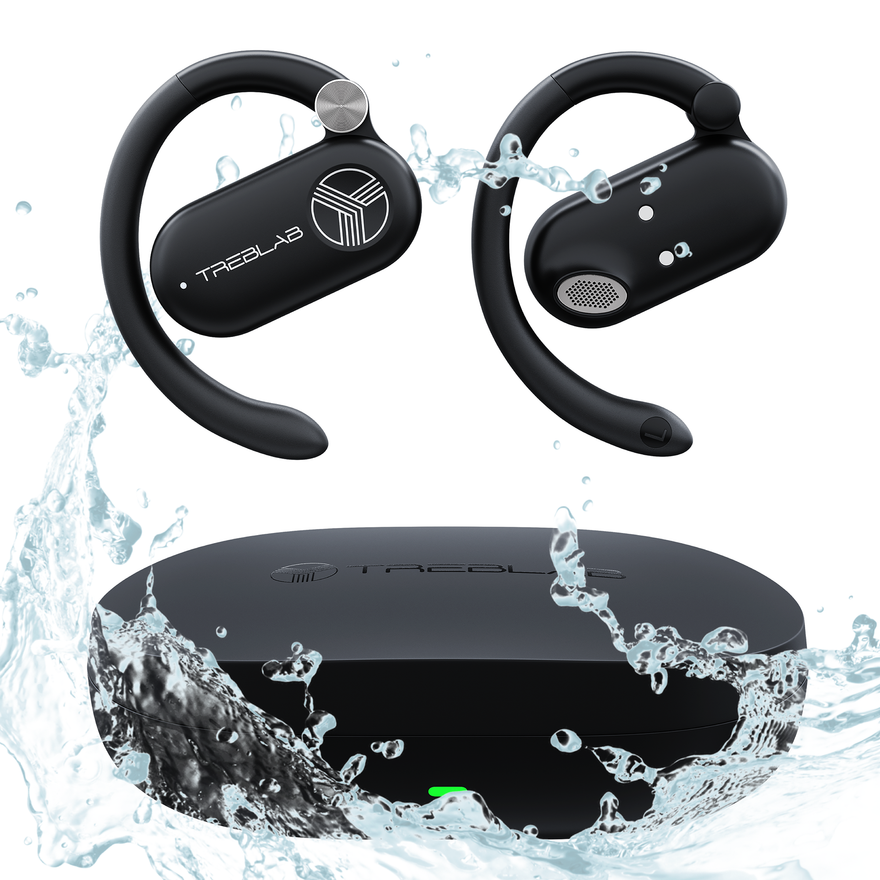
TREBLAB X-Open
Best Earbuds for Daith Piercing
Compact Charging Case for Extended Playtime
The sleek charging case provides an additional 30 hours of power, making it easy to carry and ensuring your daith piercing earbuds are always ready for use.
Open-Ear Design for Awareness
The open-ear earphones for daith piercing on the market keep you aware of your surroundings while still enjoying high-quality audio, ideal for outdoor activities and safe workouts.
What Makes Earbuds Compatible with a Daith Piercing?

A daith piercing sits in the crus of the helix — the innermost cartilage fold that arches over the ear canal opening. This is not a peripheral location. It is the exact zone that most earbuds either rest on, press through, or create suction against during normal wear. For anyone with a daith piercing, choosing the wrong earbud type means repeated mechanical contact with active or healed jewelry, which can lead to irritation, inflammation, and, in the worst cases, jewelry migration or rejection.
The anatomy defines the problem
The crus of the helix curves inward directly above the tragus and antitragus. Standard in-ear earbuds, when inserted, displace the silicone tip against this fold. Larger stabilizer fins — the kind used in sport earbuds like older JBL and Samsung models — press against the antihelix and upper concha, compressing the surrounding tissue. Even a light squeeze repeated over hours adds up.
Incompatible fit types
Incompatible fit types fall into three categories. First: standard in-ear silicone tips, whether single, double, or triple-flange — these insert into the canal and brace against the crus of the helix on entry and throughout wear. Second: deep-seal ANC earbuds, which require active pressure against the canal wall to maintain noise cancellation — the tighter the ANC seal, the more force is applied to the piercing site. Third: sport earbuds with large stabilizer fins or wingtips designed to lock into the concha bowl — these wedge against the antihelix and can come into direct contact with jewelry, depending on piercing placement.
Compatible fit types
Compatible fit types avoid the inner ear cartilage entirely. Open-ear hook designs sit against the outer helix and use a rear-hanging hook for stability — the driver faces the ear canal without touching it. Bone conduction earbuds bypass the ear completely, resting on the temporal bone at the cheekbone. Clip-on and cuff-style designs (like the Bose Ultra Open) grip the outer ear cartilage — the antihelix or the ear's outer rim — well away from the daith zone. Semi-open designs that rest at the canal entrance without insertion are borderline: safe for fully healed piercings, risky for fresh ones.
Four parameters to verify before buying
First, the ear contact map — check which anatomical zones the earbud physically touches, not just how it's marketed. "Comfortable fit" means nothing specific. Second, weight per earbud — units over 10–11g exert gravitational pull on the ear hook that can transfer pressure to adjacent cartilage. Third, the fit mechanism — a hook that stays put by friction rather than one that requires tightening against the ear — has very different pressure profiles. Fourth, jewelry clearance — a 6–8mm daith ring or horseshoe barbell takes up physical space; the earbud's inner profile needs to accommodate that geometry without pushing the jewelry into the canal wall.
Top 10 Earbuds for Daith Piercing - Comparison Table

The table below compares all 10 models across the five criteria that matter most for daith piercing compatibility. This is the filter that precedes any conversation about sound quality or features — if a model contacts the wrong zone, the rest of its specs are irrelevant for this use case.
|
Model |
Fit Type |
Ear Contact Zone |
Weight (per unit) |
Battery Life |
IPX Rating |
Price |
|
TREBLAB X-Open |
Open-hook |
Outer helix only |
8.9g |
10h + 30h case |
IPX5 |
~$50 |
|
Bose Ultra Open |
Clip-on cuff |
Outer antihelix rim |
7.3g |
7.5h + 14.5h case |
IPX4 |
~$299 |
|
Ugee FreSound Inspiration |
Open-hook |
Outer helix only |
~7g |
8h + 24h case |
IPX5 |
~$40 |
|
Shokz OpenRun Pro 2 |
Bone conduction |
Cheekbone/temple — zero ear contact |
~29g (full unit) |
10h |
IP55 |
~$180 |
|
Anker Soundcore Life P2 |
In-ear semi-open |
Ear canal + concha |
~5g |
7h + 35h case |
IPX5 |
~$30 |
|
Oladance OWS1 |
Clip-on open-ear |
Outer concha only |
~8.5g |
16h (no case battery) |
IPX4 |
~$160 |
|
Philips Go A7607 |
Open-hook |
Outer helix only |
~6g |
6h + 18h case |
IPX5 |
~$60 |
|
TOZO T9 |
In-ear |
Ear canal |
~5.4g |
8h + 32h case |
IPX8 |
~$35 |
|
JBL Endurance Peak 3 |
In-ear + hook |
Ear canal + stabilizer hook |
~6.7g |
10h + 30h case |
IP68 |
~$100 |
|
Nothing Ear (a) |
In-ear |
Ear canal + concha |
~4.8g |
9.5h + 30h case |
IP54 |
~$99 |
Fit type legend:
- Open-hook — driver floats outside the ear canal; hook anchors on the outer helix; zero insertion pressure
- Clip-on — clips onto the outer ear cartilage rim; no contact with inner ear anatomy
- Bone conduction — vibrates the cheekbone directly; earbuds do not touch the ear at all
- In-ear — inserts into the ear canal; varies from light-insertion semi-open to deep-seal ANC profiles
Top 10 Earbuds for Daith Piercing
TREBLAB X-Open - Best Overall Earbuds for Daith Piercing

Rating: ⭐⭐⭐⭐⭐
The best wireless earbuds for daith piercing, TREBLAB X-Open uses a behind-ear hook design that anchors on the outer helix, keeping the driver floating outside the ear canal with zero contact with the crus of the helix where a daith sits. At 8.9g per unit, it's one of the lightest open-hook earbuds available. Bluetooth 5.4, 40 hours total battery life, dual ENC microphones, and IPX5 sweat resistance make it a complete package — all for under $50.
Detailed Specifications:
- Fit Type: Open-hook (air conduction)
- Driver Size: 14.2mm
- Bluetooth Version: 5.4
- Battery Life (earbuds): 10 hours
- Battery Life (total with case): 40 hours
- Weight (per earbud): 8.9g
- Water Resistance: IPX5
- Microphone: Dual ENC microphones
- Charging: USB-C + 5W wireless charging
- Price: ~$50
+ Pros:
- Zero daith contact — safe from day one of healing
- Ultralight at 8.9g per unit
- 40h total battery — class-leading at the price
- Dual ENC mics for clear calls in noise
- IPX5 — handles sweat and rain
- Bluetooth 5.4 with ≤100ms low latency
- USB-C + wireless charging at sub-$50
- Cons:
- Black only — no color options
- No multipoint connection
- Audible sound leakage at high volumes
Why it's our choice for Daith piercings
The daith-friendly earbuds X-Open's hook geometry physically bypasses the crus of the helix entirely — the driver rests outside the ear, touching nothing inside. At 8.9g, there's no gravitational pull transferring pressure to the cartilage. It's the only model in this roundup that combines zero daith contact, IPX5 protection for healing skin, and a sub-$50 price — making it the default first recommendation for any piercing stage.
Bose Ultra Open Earbuds

Rating: ⭐⭐⭐⭐☆
The Bose Ultra Open earbuds that work with daith piercings use a clip-on cuff design — a flexible three-part construction that hooks around the outer antihelix without touching the ear canal or the crus of the helix at all. Bose explicitly notes that the design was built to avoid interference with piercings and glasses. Proprietary OpenAudio technology delivers surprisingly private, rich sound through a 12mm dual-driver design that sits in the ear canal from the outside.
Detailed Specifications:
- Fit Type: Clip-on cuff (OpenAudio)
- Driver Size: 12mm (dual driver)
- Bluetooth Version: 5.3 (aptX Adaptive, Snapdragon Sound)
- Battery Life (earbuds): 7.5 hours
- Battery Life (total with case): 27 hours
- Weight (per earbud): 6.4g
- Water Resistance: IPX4
- Microphone: Dual microphones
- Charging: USB-C (no wireless charging)
- Price: ~$299
+ Pros:
- Bose officially confirms piercing compatibility
- Lightest clip-on design at 6.4g per unit
- Private sound without any canal seal
- Class-leading Immersive Audio spatial mode
- aptX Adaptive for near-lossless audio
- Adjustable cuff position along the ear ridge
- Rich Bose's sound character in an open format
- Cons:
- $299 is hard to justify vs. alternatives
- IPX4 — weakest rating in this roundup
- No wireless charging in the case
- Short 7.5h battery life
- Immersive Audio drops battery to 4.5h
Why it's our choice for Daith piercings
Bose is the only manufacturer in this list that explicitly addresses piercing compatibility in its product documentation — the cuff clips to the outer antihelix rim, a zone entirely separate from the daith site. The adjustable sliding fit lets you position the earbud away from jewelry if needed. For anyone who wants zero guesswork about contact geometry, the Ultra Open delivers that certainty — at a premium.
Ugee FreSound Inspiration

Rating: ⭐⭐⭐⭐☆
The FreSound Inspiration is Ugee's first audio product, and it delivers a legitimate open-hook design at a budget price. A 0.8mm Ni-Ti memory alloy wire inside the silicone hook molds to the shape of your ear and stays there — no insertion, no pressure on the inner cartilage, and no daith contact. At 8.7g per earbud and a 32-hour total battery life, it punches well above its ~$32 price tag for piercing-compatible daily use.
Detailed Specifications:
- Fit Type: Open-hook (air conduction)
- Driver Size: 12mm (fiber bio-diaphragm)
- Bluetooth Version: 5.3
- Battery Life (earbuds): 8 hours
- Battery Life (total with case): 32 hours
- Weight (per earbud): 8.7g
- Water Resistance: IPX5
- Microphone: AI noise cancellation mic
- Charging: USB-C
- Price: ~$32–40
+ Pros:
- Ni-Ti memory alloy hook molds to your ear shape
- 32h total battery — exceptional for the price
- Directional acoustics reduces sound leakage
- IPX5 for sweat and outdoor use
- AI mic delivers solid call clarity
- Soft liquid silicone — skin-safe for sensitive ears
- Cons:
- Highs roll off quickly — lacks air and detail
- No app or EQ adjustment
- Audible leakage at higher volumes
- Limited color/style options
- No multipoint connection
Why it's our choice for Daith piercings
The memory alloy hook molds to your specific ear geometry and stays put, so the driver position remains stable relative to your ear and never drifts toward the inner cartilage fold. The silicone outer surface is also non-abrasive against skin, which matters when jewelry is present, and cartilage tissue is still sensitive. A strong daith-safe pick for budget-conscious buyers.
Shokz OpenRun Pro 2

Rating: ⭐⭐⭐⭐☆
The Shokz OpenRun Pro 2 makes zero contact with the ear at any point — the transducers rest on the cheekbones, transmitting sound through bone vibration directly to the cochlea. For daith piercing wearers, this is the most anatomically removed option in the entire list. The flagship DualPitch technology pairs a bone conduction driver with a dedicated air conduction unit to improve bass — a historically weak spot in the category — while the Ni-Ti frame maintains a secure, sporty fit with a total unit weight of 29 g.
Detailed Specifications:
- Fit Type: Bone conduction (DualPitch — bone + air conduction)
- Driver Size: Proprietary dual-driver (bone conduction + air conduction speaker)
- Bluetooth Version: 5.3
- Battery Life (earbuds): 12 hours
- Battery Life (total with case): 12 hours (no charging case)
- Weight (full unit): 29g
- Water Resistance: IP55 (dust + water resistant)
- Microphone: Dual AI noise reduction mics (96.5% ambient noise filter)
- Charging: USB-C (quick charge: 5 min = 2.5h playback)
- Price: ~$180
+ Pros:
- Zero ear contact — most daith-safe design in the roundup
- 12h battery + 5 min quick charge = 2.5h extra
- Best bass of any bone conduction headphone tested
- IP55 — covers dust and water jets
- AI mics handle wind noise up to 25 km/h
- App with 6 EQ presets + 2 custom profiles + multipoint
- Cons:
- No charging case — no on-the-go top-up
- Bone vibration is still perceptible at high volumes
- Second-highest price in the roundup at $180
- Gets drowned out in very loud environments
- Limited sound privacy in public spaces
Why it's our choice for Daith piercings
Bone conduction doesn't interact with the ear at all — the transducers sit on the cheekbones, completely bypassing the entire ear anatomy, including the daith site. This makes it the single safest option for anyone with a fresh piercing, severe cartilage sensitivity, or a history of jewelry migration. If avoiding any ear contact whatsoever is the priority, the OpenRun Pro 2 has no competition in this list.
Anker Soundcore Life P2

Rating: ⭐⭐⭐☆☆
The Soundcore Life P2 is the only standard in-ear model in the top five — included specifically for users with fully healed daith piercings (9+ months) who want maximum value. Its shallow silicone tips create a light seal rather than a deep-insertion one, and the stemmed AirPods-style body doesn't apply pressure through stabilizer fins. IPX7 waterproofing, 40-hour total battery life, and a 4-mic CVC 8.0 array make it a standout at ~$30. Not recommended for fresh or healing piercings.
Detailed Specifications:
- Fit Type: In-ear (shallow silicone tip, stemmed design)
- Driver Size: 6mm graphene dynamic
- Bluetooth Version: 5.0
- Battery Life (earbuds): 7 hours
- Battery Life (total with case): 40 hours
- Weight (per earbud): ~5g
- Water Resistance: IPX7 (submersion up to 1m / 30 min)
- Microphone: 4-mic array with CVC 8.0 noise reduction
- Charging: USB-C
- Price: ~$25–30
+ Pros:
- IPX7 — strongest water resistance in the roundup
- 40h total battery at ~$30 is an outstanding value
- 4-mic CVC 8.0 for strong call clarity
- Shallow tip insertion — less canal pressure
- 5 ear tip sizes included
- Physical buttons — no accidental touches
- Cons:
- In-ear design — unsafe for fresh or healing daith piercings
- No app or EQ customization
- Bluetooth 5.0 — outdated vs. current competitors
- Recessed mids — vocals lack presence
- No onboard volume control
Why it's our choice for Daith piercings
Among in-ear models, the Life P2's shallow silicone tip profile creates less insertion depth than deep-seal ANC designs, reducing direct pressure on the crus of the helix. Smaller tip sizes further minimize contact with the inner ear anatomy. This is still an in-ear design — it requires a fully healed daith — but among budget in-ears, the shallow fit geometry and soft silicone material make it the most cartilage-considerate option in its category.
Oladance OWS1

Rating: ⭐⭐⭐⭐☆
The Oladance OWS1 uses a five-point multi-support system that distributes the earbud's weight across the outer ear without any insertion — the dual 16.5mm drivers suspend in front of the ear canal, leaving the entire inner ear anatomy untouched. Its Red Dot Award-winning design hooks around the concha and outer helix, creating zero contact with the crus of the helix. The built-in 160mAh battery delivers 16 hours of continuous play without needing a charging case.
Detailed Specifications:
- Fit Type: Clip-on open-ear (air conduction, five-point support)
- Driver Size: Dual 16.5mm dynamic (bio-diaphragm)
- Bluetooth Version: 5.2
- Battery Life (earbuds): 16 hours
- Battery Life (total with case): 16 hours (carry case has no battery)
- Weight (per earbud): ~12.7g
- Water Resistance: IPX4
- Microphone: Single ENC mic
- Charging: USB-C (case charging only, no built-in case battery)
- Price: ~$155–160
+ Pros:
- Five-point support spreads weight — zero pressure on any single cartilage point
- Dual 16.5mm drivers — largest in this roundup by far
- 16h battery on a single charge without case dependency
- Red Dot Award design — genuine ergonomic engineering, not marketing
- Companion app with touch control customization
- Multiple color options (Interstellar Blue, Martian Orange, Cloud White, Space Silver)
- Cons:
- Carry case has no battery — no on-the-go top-up
- IPX4 only — weakest water resistance for the price tier
- Touch controls are overly sensitive — frequent accidental triggers
- Bass output is notably weak for 16.5mm drivers
- Heaviest per-earbud weight in the open-ear category at 12.7g
Why it's our choice for Daith piercings
The OWS1's five-point support architecture is engineered to distribute load across the outer ear rather than concentrate it at any single contact zone. The driver sits in front of the canal entrance with no hook penetrating the inner ear anatomy — the crus of the helix is completely clear. For users with large daith jewelry or complex piercings with multiple points, the OWS1's wide contact footprint on the outer ear ridge makes it one of the most geometrically accommodating designs in this list.
Philips Go A7607

Rating: ⭐⭐⭐☆☆
The Philips TAA7607 is a bone conduction neckband headphone with 17mm drivers — the largest bone conduction transducers in this roundup — that sit on the cheekbones and transmit audio through the skull. Like the Shokz OpenRun Pro 2, it makes zero contact with the ear. It adds an LED running light for visibility, a built-in bone mic for call quality in wind, and IP66 dust- and water-protection, all at a significantly lower price than the Shokz. The trade-off is sound quality.
Detailed Specifications:
- Fit Type: Bone conduction (neckband)
- Driver Size: 17mm dynamic bone conduction
- Bluetooth Version: 5.2
- Battery Life (earbuds): 9 hours
- Battery Life (total with case): 9 hours (no charging case)
- Weight (full unit): 38g
- Water Resistance: IP66 (dustproof + high-pressure water jets)
- Microphone: Dual mics (AI mic + bone conduction mic)
- Charging: Proprietary magnetic USB-C cable
- Price: ~$80–100
+ Pros:
- Zero ear contact — fully safe for any piercing stage
- IP66 covers dust and high-pressure water jets — stronger than IP55
- LED running light for low-visibility outdoor training
- Bone conduction mic improves call quality in wind
- Multipoint connection — pairs with two devices simultaneously
- 17mm drivers are the largest bone conduction transducers in the roundup
- Cons:
- Proprietary magnetic charging cable — not standard USB-C
- Sound quality is underwhelming for the driver size
- Real-world battery falls to ~6h at high volumes with LED active
- Neckband form factor can interfere with helmets and collars
- SBC codec only — no AAC or aptX support
Why it's our choice for Daith piercings
Bone conduction contacts the cheekbone only — the ear, the cartilage, and the daith piercing site are entirely uninvolved. The Philips A7607 delivers this same anatomical safety as the Shokz OpenRun Pro 2 at roughly half the price. IP66 protection is also a step above most competitors, making it a practical choice for outdoor training in wet conditions while protecting a healing piercing from moisture-driven irritation.
TOZO T9

Rating: ⭐⭐⭐☆☆
The TOZO T9 is a budget-tier stemmed in-ear with a shallow silicone tip design and no stabilizer fins — making it one of the more cartilage-considerate in-ear options at the sub-$35 price point. IPX7 waterproofing, a 4-mic ENC system, and wireless charging case support are all strong overperformers at the price. Like the Soundcore Life P2, this is an in-ear model — it sits inside the ear canal and requires a fully healed daith piercing. Not recommended for fresh or healing piercings.
Detailed Specifications:
- Fit Type: In-ear (shallow silicone tip, stemmed design)
- Driver Size: 8mm dynamic
- Bluetooth Version: 5.3
- Battery Life (earbuds): 8 hours
- Battery Life (total with case): ~32 hours
- Weight (per earbud): ~5.4g
- Water Resistance: IPX7 (submersion up to 1m / 30 min)
- Microphone: 4-mic ENC array
- Charging: USB-C + wireless charging (Qi-compatible case bottom)
- Price: ~$25–35
+ Pros:
- IPX7 waterproofing at under $35 — exceptional value
- A wireless charging case at this price is rare
- 4-mic ENC delivers strong call quality for the tier
- Bluetooth 5.3 — newer than most competitors at the price
- Fast charge: 10 min = 1.5h playback
- No stabilizer fins — fewer inner-ear contact points
- Cons:
- In-ear design — unsafe for fresh or healing daith piercings
- Sound is muffled and bass-heavy — lacks clarity and detail
- Touch controls are oversensitive — frequent accidental triggers
- Mids are flat and recessed — vocals lack presence
- No companion app or EQ adjustment
Why it's our choice for Daith piercings
Among sub-$35 in-ear designs, the T9's shallow stemmed profile and absence of stabilizer fins reduce the number of inner-ear contact points to a minimum — just the silicone tip at the canal entrance. No wing presses against the antihelix, no fin contacts the concha. For fully healed daith piercings on a tight budget, this is the most cartilage-aware in-ear option at the lowest price in this roundup.
JBL Endurance Peak 3

Rating: ⭐⭐⭐☆☆
The JBL Endurance Peak 3 is a hook-anchored in-ear with JBL's TwistLock system — a large bendable ear hook that wraps around the outer helix for mechanical lock-in. The hook contacts the outer ear; the silicone tip inserts into the canal. This dual contact creates a potential pressure point at the hook-helix junction, depending on piercing placement. IP68 water and dust resistance, 50 total battery hours, and Ambient Aware transparency mode make it the most feature-complete in-ear on this list. Requires fully healed daith; careful placement check needed.
Detailed Specifications:
- Fit Type: In-ear + TwistLock ear hook (silicone tip + outer helix hook)
- Driver Size: 10mm dynamic
- Bluetooth Version: 5.3
- Battery Life (earbuds): 10 hours
- Battery Life (total with case): 50 hours
- Weight (per earbud): ~6.7g
- Water Resistance: IP68 (dust + submersion 1.5m / 30 min — salt and fresh water)
- Microphone: Dual beamforming mics per earbud
- Charging: USB-C (fast charge: 10 min = 1h)
- Price: ~$90–100
+ Pros:
- IP68 — the highest water resistance rating in this roundup
- The 50h total battery is the longest battery life in the roundup
- TwistLock hook stays locked through extreme movement
- Ambient Aware + TalkThru modes for situational awareness
- JBL app with fully customizable 10-point EQ
- Dual beamforming mics per earbud for clear calls
- Cons:
- TwistLock hook contacts the outer helix — risk of pressure on nearby piercings
- In-ear tip requires healed daith — unsafe for fresh piercings
- Hook becomes uncomfortable during extended wear (2h+)
- Bulky charging case — difficult to pocket
- Bass-heavy tuning — lacks midrange balance
Why it's our choice for Daith piercings
The TwistLock hook wraps around the outer helix — a different anatomical zone than the crus of the helix where the daith sits — so for most ear geometries, there is physical separation between the hook and the piercing site. That said, daith placement varies, and users should physically verify clearance before committing to extended wear. For fully healed piercings with confirmed hook clearance, the IP68 rating and 50h battery make the Peak 3 the most durable and longest-lasting in-ear in this roundup.
Nothing Ear (a)

Rating: ⭐⭐⭐⭐☆
The Nothing Ear (a) is the sole ANC model in this list — included for users with fully healed daith piercings who want passive and active isolation. Its 11mm dynamic driver, adaptive Smart ANC, and transparent stem design deliver premium-tier features at $99. The stemmed body makes no contact with the concha walls, and the silicone tip is a standard shallow-insertion fit with no stabilizer wings. Standard in-ear design — requires a fully healed daith. Not suitable for healing piercings.
Detailed Specifications:
- Fit Type: In-ear (shallow silicone tip, transparent stemmed design)
- Driver Size: 11mm dynamic (PMI + TPU diaphragm)
- Bluetooth Version: 5.3 (LDAC support)
- Battery Life (earbuds): 9.5h (ANC off) / 5.5h (ANC on)
- Battery Life (total with case): 42.5h (ANC off)
- Weight (per earbud): ~4.8g
- Water Resistance: IP54 (dust + splash resistant)
- Microphone: 3-mic array with adaptive Smart ANC
- Charging: USB-C fast charge (10 min = 10h playback)
- Price: ~$99
+ Pros:
- Lightest in-ear in the roundup at 4.8g
- Adaptive Smart ANC adjusts automatically to the ear seal
- LDAC support for high-quality wireless audio
- 9.5h battery (ANC off) — strong for an ANC earbud
- 10 min fast charge = 10h playback
- Nothing X app with EQ presets and full control customization
- Cons:
- Standard in-ear — unsafe for fresh or healing daith piercings
- ANC performance is mediocre — not comparable to Sony or Apple
- IP54 only — not suitable for heavy sweat or rain
- No wireless charging in the case
- ANC cuts battery from 9.5h to 5.5h — significant drop
Why it's our choice for Daith piercings
The Nothing Ear (a) has the lightest in-ear body in this roundup at 4.8g, which translates directly to less gravitational force on the silicone tip against the inner ear anatomy. Its stemmed design, without wings or fins, keeps contact confined to the silicone tip only — no additional structures press against the concha or antihelix. For fully healed daith piercings where ANC is a priority, it's the safest in-ear ANC option in this list by fit geometry.
How to Choose Earbuds for Daith Piercing

The single most important criterion when choosing earbuds for a daith piercing is the fit architecture — specifically, whether the earbud makes physical contact with the inner-ear cartilage fold. All other specs (sound quality, battery life, price) are secondary to this structural compatibility check.
Start with Fit Type
Open-ear hook designs anchor on the outer helix with zero contact with the crus of the helix; bone conduction sits on the cheekbones and bypasses the ear entirely; clip-on designs grip the outer antihelix rim. All three are safe at any stage of healing. Standard in-ear silicone tips insert into the canal and press against the inner cartilage — they're only viable for fully healed piercings. If you're unsure which category a model falls into, check where the earbud physically rests, not how the brand describes "comfort."
Piercing Age Changes What You Can Wear
A fresh daith piercing (under 6–9 months) is an open wound in active healing — any repeated mechanical contact from earbuds accelerates irritation, increases migration risk, and can cause hypertrophic scarring. At this stage, only open-ear hook and bone conduction designs are appropriate. Once the piercing is fully healed — confirmed by zero tenderness, no discharge, and stable jewelry — shallow in-ear designs become cautiously viable.
Check Weight Per Earbud
An open-ear hook that weighs over 10–11g per unit exerts gravitational pull on the outer helix, which is transmitted through the cartilage and can create secondary pressure on adjacent piercings during extended wear. In this roundup, the Bose Ultra Open (6.4g), Ugee FreSound (8.7g), and TREBLAB X-Open (8.9g) all clear this threshold comfortably — while the Oladance OWS1 at 12.7g is the one open-ear design that approaches the pressure zone for all-day sessions.
IPX Rating Matters for Healing Piercing Health
Moisture inside a healing piercing channel accelerates bacterial growth and extends healing time, making water resistance a health consideration — not just a durability one. IPX4 is the absolute minimum for workout use with a healing daith; IPX5 is the better standard. Every open-ear model in this roundup meets at least IPX4 — if a model you're considering rates below that, avoid wearing it during workouts until the piercing is fully healed.
FAQ
Can you wear earbuds with a daith piercing?
Yes — but only specific types. Open-ear hook designs, bone conduction headphones, and clip-on earbuds are safe at any healing stage because they don't contact the crus of the helix where the daith sits. Standard in-ear silicone tip designs insert into the ear canal and press against the inner cartilage, making them incompatible with fresh or healing daith piercings.
What earbuds work best for a fresh daith piercing?
Open-ear hook earbuds are the best choice for a fresh daith piercing. Models like the TREBLAB X-Open anchor on the outer helix with zero contact with the inner ear anatomy, keeping all pressure away from the healing site. Bone conduction headphones like the Shokz OpenRun Pro 2 are equally safe, as they rest on the cheekbones and bypass the ear entirely.
Do earbuds affect daith piercing healing?
In-ear daith piercing earphones directly affect daith piercing healing by creating repeated mechanical pressure on the crus of the helix during insertion and wear. This friction delays healing, causes irritation, and increases migration risk. Open-ear and bone conduction designs do not interact with the daith site and have no measurable effect on the healing process when worn correctly.
Are wireless earbuds safe for daith piercings?
Wireless versus wired is not the relevant distinction — fit type is. A wireless open-ear hook is safe; a wireless in-ear with silicone tip is not, for a healing daith. Additionally, the magnets inside wireless charging cases can occasionally attract ferromagnetic jewelry, which is worth noting if your daith jewelry contains nickel. Titanium, implant-grade steel, and niobium jewelry are not affected.
What is the best overall earbud for a daith piercing?
The TREBLAB X-Open is the best overall earbud for daith piercing. Its open-hook design places the 14.2mm driver outside the ear canal with zero contact with the daith site, weighs only 8.9g per unit to minimize pressure transfer, and delivers 40 hours of total battery life with IPX5 water resistance — all for under $50. It is safe from the first day of healing.
How long after a daith piercing can I wear earbuds?
Open-ear hook and bone conduction earbuds can be worn immediately after a daith piercing, as they don't contact the piercing site. Semi-open in-ear designs with shallow insertion may be considered after 6–9 months once the piercing is fully healed and symptom-free. Deep-seal ANC earbuds and models with large stabilizer fins should be avoided until healing is complete, and, ideally, tested cautiously before regular use.
Conclusion
A daith piercing doesn't disqualify you from great audio — it just means fit architecture has to come before every other spec on the list. Open-ear hook designs and bone conduction headphones eliminate the contact problem entirely, and several of the best options in both categories cost well under $100. The TREBLAB X-Open stands out as the strongest all-around choice: it's the only model in this roundup that combines a verified zero-contact hook fit, IPX5 water resistance, 40-hour battery life, and a sub-$50 price — making it the right answer for fresh piercings, healing piercings, and fully healed ones alike.
For users with healed daith piercings who need ANC, a premium open-ear sound profile, or maximum workout durability, the Bose Ultra Open, Shokz OpenRun Pro 2, and JBL Endurance Peak 3 each deliver where the TREBLAB X-Open doesn't. The choice between them comes down to how much you're willing to spend and which trade-offs — sound quality, battery, waterproofing, form factor — matter most to your daily use case. Pick the fit type first, verify the weight and IPX rating, then decide on features. In that order, every pick on this list makes sense.


