


Open earbuds rest outside your ear canal rather than inside it, eliminating that sealed-in feeling. Athletes favor this design because it delivers hours of comfort without pressure points or that sweaty, clogged sensation you get from traditional in-ear tips. Your ears stay cool and breathable, which matters when you're pushing through mile seven of a training run or finishing a second HIIT session.
When you're moving through traffic or sharing trails with cyclists, hearing your surroundings isn't optional—it's essential. Open sport earbuds let ambient sound reach your eardrums naturally, so you catch approaching cars, warning shouts, or bike bells without yanking out an earbud. That situational awareness keeps you safer on busy streets, winding bike paths, and anywhere your workout puts you near vehicles or other people.
Best
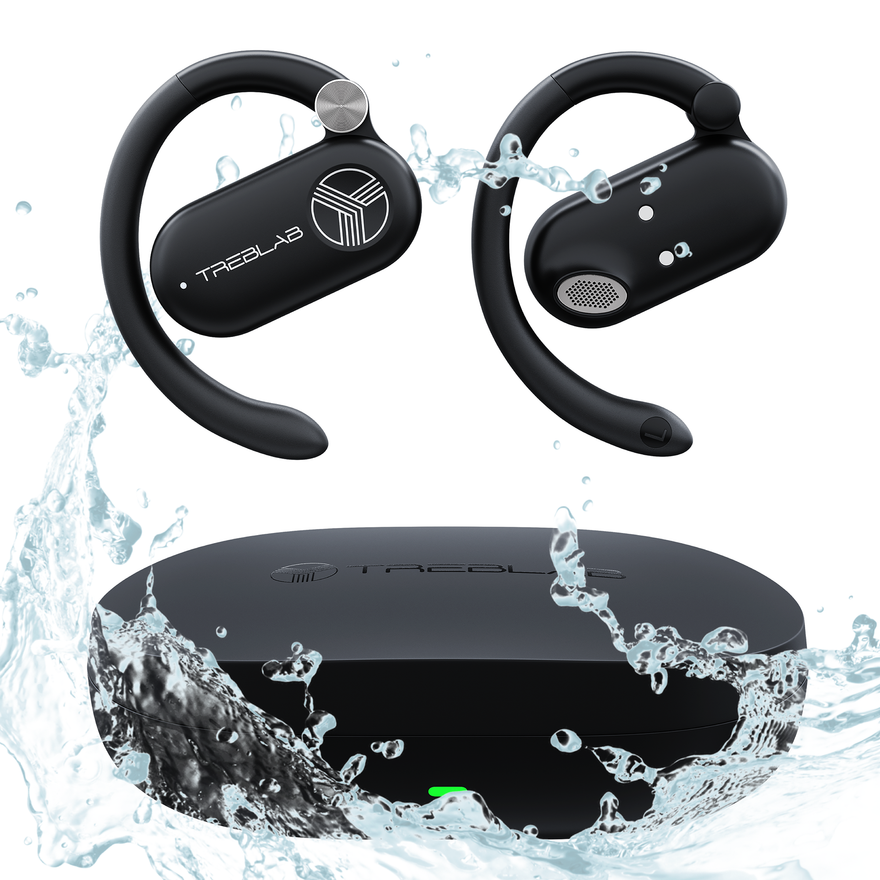
TREBLAB X-Open
Best Sport Open Earbuds
Compact Charging Case for Extended Playtime
The sleek charging case provides an additional 30 hours of power, making it easy to carry and ensuring your open earbuds for sports are always ready for use.
Open-Ear Design for Awareness
The open-ear sports earbuds on the market keep you aware of your surroundings while still enjoying high-quality audio, ideal for outdoor activities and safe workouts.
This guide covers ten models spanning ear hooks, clip-on cuffs, and wraparound designs, with prices ranging from budget-friendly to premium. You'll find options optimized for all-day battery life, others built for maximum sound quality, and some explicitly engineered for clear calls during windy outdoor runs. Whatever your training style—sprints, long-distance cycling, gym sessions, or marathon prep—there's a model here that fits your movement.
What are sport open earbuds?

Sports open earbuds sit just outside your ear canal, directing sound toward your eardrum without sealing it off. Traditional in-ear buds use silicone tips that push into your canal for passive isolation, blocking external noise. Bone-conduction headsets bypass your eardrums entirely, transmitting vibrations through your cheekbones—effective for awareness but acoustically limited. Semi-open ANC earbuds feature venting holes to reduce pressure, but they still partially seal your canal and rely on noise cancellation circuits that open designs skip entirely.
Why do athletes choose open sport models?
Athletes pick open designs because hearing matters as much as sound quality during outdoor training. You need to catch that car approaching from behind, respond when a training partner asks for your pace, or react to a race marshal's instructions. Open earbuds also eliminate the pressure buildup and trapped moisture that plague sealed earbuds during intense sessions. Your ears breathe naturally, sweat evaporates instead of pooling against silicone tips, and there's zero discomfort after wearing them for 90 minutes straight through intervals or tempo runs.
Use cases
These earbuds excel in any environment where blocking ambient sound creates risk or annoyance. Road runners need to hear traffic and pedestrian warnings. Urban cyclists depend on hearing horns and engine noise. Trail runners benefit from catching branch snaps or fellow runner callouts on narrow paths. Gym-goers appreciate hearing trainers' instructions without removing earbuds. Team sport warm-ups require communication with teammates. Commuters stay alert to platform announcements and street crossings. If your activity involves moving through shared spaces, open earbuds make sense.
Quick comparison table of the top 10

|
Model |
Design Type |
Weight per Bud |
IP Rating |
Battery (buds/total) |
Key Sport Strengths |
Price Segment |
|
TREBLAB X-Open |
Hook |
8.9g |
IPX5 |
10h / 40h |
Best overall balance, secure fit, clear calls |
Midrange |
|
Bose Ultra Open |
Clip-on/Cuff |
6.4g |
IPX4 |
7.5h / 27h |
Premium comfort, excellent sound, lightweight |
Premium |
|
Shokz OpenRun Pro 2 |
Bone conduction band |
31.3g (total) |
IP55 |
12h / 12h |
Maximum awareness, ultra-stable, long battery |
Midrange |
|
Soundcore AeroFit 2 |
Hook |
10g |
IP55 |
10h / 42h |
Best value, adjustable fit, excellent battery |
Budget |
|
Baseus Inspire XC1 |
Clip-on |
6g |
IP66 |
8h / 40h |
Bose-tuned audio, premium sound, dual-driver |
Midrange |
|
Acefast Acefit Air |
Hook |
7.5g |
IP54 |
8h / 32h |
Lightweight, ultra-thin, budget-friendly |
Budget |
|
Sony LinkBuds |
Ring/Donut |
4.1g |
IPX4 |
5.5h / 17.5h |
Sony sound signature, ultra-light, app integration |
Midrange |
|
Nothing Ear (Open) |
Hook |
8.1g |
IP54 |
8h / 30h |
Design-forward, transparent aesthetic, multipoint |
Midrange |
|
JBL SoundGear Sense |
Hook |
13.1g |
IP54 |
6h / 24h |
JBL bass tuning, detachable neckband, OpenSound tech |
Midrange |
|
H2O Audio Tri 2 Pro |
Bone conduction band |
33g (total) |
IPX8 |
6-9h / 6-9h |
Swimming-capable, 8GB MP3 storage, triathlon-ready |
Premium |
The 10 best sport open earbuds
TREBLAB X-Open — Best Overall Sport Open Earbuds

Rating: ⭐⭐⭐⭐⭐
The TREBLAB X-Open delivers the sweet spot between performance and price that serious athletes demand. Precision-tuned 14.2mm drivers push impressive volume without distortion, while behind-ear hooks with 8.9g weight stay planted during sprints and box jumps. IPX5 rating handles heavy sweat and rain, 10-hour battery survives marathon training runs, and dual microphones with ENC cut through wind at running pace. Bluetooth 5.4 maintains stable connections, and the compact charging case adds 30 hours of battery life without bulk.
Detailed specifications
- Design: Behind-ear hook with open speaker positioning
- Weight per earbud: 8.9g
- Driver size: 14.2mm dynamic drivers
- Water resistance: IPX5 (sweat and rain resistant)
- Battery life: 10 hours per charge, 40 hours total with case
- Bluetooth: 5.4 with stable 10m range
- Charging: USB-C, supports 5W wireless charging
- Microphones: Dual mics with Environmental Noise Cancellation (ENC)
- Controls: Touch controls on each earbud
- Voice assistant: Siri and Google Assistant compatible
- Codec support: SBC, AAC
- Price: $69.99–$99.99
+ Pros:
- Rock-solid fit through intense intervals and long runs
- 10-hour battery outlasts most training sessions
- Clear calls even in windy conditions
- Proven IPX5 sweat resistance
- Lightweight 8.9g eliminates pressure points
- Reliable Bluetooth 5.4 connectivity
- Wireless charging convenience
- Cons:
- Limited bass response (open design physics)
- No companion app for customization
Why it's our sport open ear choice
After testing dozens of open models, the X-Open nails what athletes actually need: bombproof fit stability, all-day battery, and sound that cuts through traffic without isolating you dangerously. The price-to-performance ratio crushes pricier competitors while delivering professional-grade build quality from a brand that understands sport audio.
Bose Ultra Open Earbuds

Rating: ⭐⭐⭐⭐
Bose engineered these clip-on cuffs to disappear on your ears through brilliant weight distribution and flexible joints. At just 6.4g per side, they're lighter than most competitors yet deliver Bose's signature audio tuning through OpenAudio technology. Immersive Audio mode spatializes sound convincingly, multipoint Bluetooth switches seamlessly between devices, and an IPX4 rating handles workout sweat. The ear-cuff design grips securely without hooks, though premium pricing demands justification.
Detailed specifications
- Design: Clip-on ear cuff with flexible joint and light-as-air grip
- Weight per earbud: 6.4g
- Driver size: 12mm custom drivers
- Water resistance: IPX4 (splash and sweat resistant)
- Battery life: 7.5 hours per charge (4.5h with Immersive Audio), 27 hours total with case
- Bluetooth: 5.3 with multipoint connectivity
- Charging: USB-C (no wireless charging)
- Microphones: Dual microphones per earbud
- Controls: Physical buttons on the battery barrel
- Voice assistant: Compatible with voice assistants
- Codec support: SBC, AAC, aptX Adaptive
- App: Bose Music app with EQ, Auto Volume, and settings
- Price: $299
+ Pros:
- Industry-leading 6.4g weight
- Premium Bose build quality
- Convincing spatial audio mode
- Flawless multipoint connectivity
- Useful Bose Music app features
- True all-day comfort
- Cons:
- $299 premium pricing
- Basic IPX4 rating only
- 7.5-hour battery trails competitors
- No wireless charging
- Cuff fit may not suit all ears
Why it's our sport open ear choice
If budget isn't a constraint and you prioritize comfort above all else, Bose delivers. The 6.4g weight and flexible design create the most comfortable extended-wear experience I've tested. Sound quality exceeds that of most open-earbuds, though you're paying a significant premium for the brand and engineering refinement.
Shokz OpenRun Pro 2

Rating: ⭐⭐⭐⭐
Shokz's latest flagship bone conduction model upgrades the formula with DualPitch technology, combining traditional bone conduction for mids and highs with a dedicated air-conduction driver for deeper bass. The titanium headband wraps securely around your head with reduced clamping force, IP55 rating stands up to heavy rain and dust, and 12-hour battery outlasts ultra-distance events. Four built-in EQ modes let you tune sound, while dual microphones with AI noise reduction keep calls clear at running speeds.
Detailed specifications
- Design: Wraparound bone conduction neckband with cheekbone transducers
- Weight: 31.3g total (full headband)
- Driver technology: DualPitch (bone conduction + air conduction dual-driver)
- Water resistance: IP55 (dust protected, rain resistant)
- Battery life: 12 hours continuous playback
- Bluetooth: 5.3 with multipoint pairing
- Charging: USB-C, quick charge (5 min = 2.5 hours playback)
- Microphones: Dual mics with AI noise reduction (96.5% background noise filtered)
- Controls: Physical buttons (power/volume+, volume-, multifunction)
- Voice assistant: Compatible with voice assistants
- Codec support: SBC, AAC
- App: Shokz app with EQ modes (Standard, Vocal, Bass Boost, Treble Boost, Classic)
- Price: $179.95
+ Pros:
- Best bone conduction bass available
- 12-hour marathon-grade battery
- IP55 handles rain and dust
- Titanium durability
- Maximum situational awareness
- Quick charge rescue feature
- Multiple EQ modes via app
- Cons:
- 31.3g is bulkier than hook styles
- Cheekbone vibration during long sessions
- Sound quality trails air conduction
- Neckband conflicts with helmets/hoodies
- Pricier than air conduction alternatives
Why it's our sport open ear choice
For cyclists and road runners who prioritize hearing traffic and environmental sounds above all else, bone conduction remains unmatched. The OpenRun Pro 2 represents the pinnacle of this technology with improved bass and marathon-grade battery life. Just understand you're sacrificing audio fidelity for ultimate awareness.
Soundcore AeroFit 2

Rating: ⭐⭐⭐⭐
Anker's AeroFit 2 disrupts the market with adjustable ear hooks that actually work—four position settings let you dial in fit and bass response. At $99.99, you get 20mm racetrack drivers with BassTurbo acoustics, IP55 protection, a spectacular 10-hour battery with 42-hour total, and wireless charging. LDAC codec support delivers hi-res audio to Android users, while multipoint connectivity enables dual-device pairing. The Soundcore app provides comprehensive EQ and control customization rarely seen at this price.
Detailed specifications
- Design: Hook-style with 4-level adjustable ear positioning
- Weight per earbud: 10g
- Driver size: 20mm × 11.5mm racetrack drivers
- Water resistance: IP55 (dust and splash resistant)
- Battery life: 10 hours per charge, 42 hours total with case
- Bluetooth: 5.4 with multipoint connectivity
- Charging: USB-C and Qi wireless charging
- Microphones: Four AI-powered beamforming mics
- Controls: Touch controls (customizable via app)
- Voice assistant: Google Assistant and Alexa compatible
- Codec support: SBC, AAC, LDAC (Android only)
- App: Soundcore app with custom EQ, 3D surround mode, and gaming mode
- Translation feature: Real-time translation in 100+ languages (via app)
- Price: $99.99 (frequently on sale for $79)
+ Pros:
- Four-position adjustable fit
- 42-hour total battery life
- Wireless charging included
- LDAC hi-res audio support
- Comprehensive app features
- IP55 beats basic competitors
- Adjustability improves bass
- Cons:
- 10g is slightly heavier
- Touch controls occasionally misfire
- Open design bass limitations
- LDAC excludes iOS users
Why it's our sport open ear choice
The AeroFit 2 delivers flagship features at half the price competitors charge. Adjustable-fit innovation solves the biggest complaint about open-earbuds, while a 42-hour battery and wireless charging eliminate the daily charging annoyance. At $99.99—often on sale for $79—these represent absurd value for athletes who refuse to overpay for branding.
Baseus Inspire XC1

Rating: ⭐⭐⭐⭐
Baseus partnered with Bose engineers to tune these clip-on earbuds, resulting in surprisingly refined sound from a hybrid dual-driver system (a 10.8mm dynamic woofer and a Knowles balanced armature tweeter). At just 6g per side with "zero-sense" air cushions, they disappear during wear. IP66 rating surpasses most competitors, 40-hour total battery lasts over a week, and Dolby Audio plus LDAC support deliver immersive spatial sound. Four microphones with adaptive noise cancellation ensure clear calls outdoors.
Detailed specifications
- Design: Clip-on ear cuff with curved-fit bionic design and air cushions
- Weight per earbud: 6g
- Driver system: Hybrid 2-way (10.8mm dynamic + Knowles balanced armature)
- Water resistance: IP66 (dust-tight, high-pressure water jets resistant)
- Battery life: 8 hours per charge, 40 hours total with case
- Bluetooth: 6.1 with multipoint connectivity
- Charging: USB-C, quick charge (10 min = 2.5 hours playback)
- Microphones: Four adaptive mics with wind noise reduction
- Controls: Physical button controls
- Voice assistant: Compatible with voice assistants
- Codec support: SBC, AAC, LDAC
- App: Baseus app with EQ presets (including Bose-tuned profile), volume modes
- Special features: Dolby Audio, Sound by Bose tuning technology
- Price: $129.99–$149.99
+ Pros:
- Bose engineering collaboration
- Dual-driver audio clarity
- 6g ultralight weight
- IP66 extreme weather rating
- 40-hour week-plus battery
- LDAC and Dolby Audio
- Bose-tuned EQ preset
- Cons:
- Clip design fit variability
- 8-hour battery vs 10-hour rivals
- Lower brand recognition
- Less polished app interface
- Multipoint disables LDAC
Why it's our sport open ear choice
When Bose engineers tune a $130 product, you get premium audio performance without premium pricing. The dual-driver system and Dolby support deliver sound quality on par with $200+ models, while the IP66 rating and lightweight comfort make it ideal for serious training. Smart athletes skip the Bose badge and pocket the $150+ savings here.
Acefast Acefit Air

Rating: ⭐⭐⭐⭐
Acefast engineered these hook-style earbuds with an ultra-thin 3mm profile that virtually disappears behind your ears. At 7.5g per side with 16mm graphene drivers and BassPulseAudio tuning, they deliver surprisingly punchy sound for $79.99. IP54 rating handles sweat and rain, 8-hour battery with 32-hour total covers most training weeks, and dual microphones with AI noise reduction keep calls clear. Bluetooth 5.3 maintains stable connections, while the compact case fits easily in running belts.
Detailed specifications
- Design: Ultra-thin 3mm hook-style with ergonomic curve
- Weight per earbud: 7.5g
- Driver size: 16mm graphene-coated dynamic drivers
- Water resistance: IP54 (splash and sweat resistant)
- Battery life: 8 hours per charge, 32 hours total with case
- Bluetooth: 5.3 with 10m stable range
- Charging: USB-C fast charging
- Microphones: Dual mics with AI call noise reduction
- Controls: Touch controls on each earbud
- Voice assistant: Siri and Google Assistant compatible
- Codec support: SBC, AAC
- Special features: BassPulseAudio low-frequency enhancement
- Price: $79.99
+ Pros:
- 3mm ultra-thin profile minimizes bulk
- $79.99 budget pricing
- 7.5g lightweight comfort
- 32-hour total battery
- Graphene drivers punch above price
- Compact case portability
- Clear AI-enhanced calls
- Cons:
- IP54 is lower than premium models
- No wireless charging
- 8-hour battery trails 10-hour leaders
- No companion app
- Basic touch controls only
Why it's our sport open ear choice
For budget-conscious athletes who need reliable open earbuds without premium features, the Acefit Air nails the fundamentals. The 3mm thin design and sub-$80 price make them ideal for first-time open-earbud purchases or backup pairs. Sound quality exceeds expectations for this price tier, though serious athletes may want longer battery life and higher IP ratings.
Sony LinkBuds

Rating: ⭐⭐⭐⭐
Sony's distinctive ring-shaped driver creates an open hole in the center, delivering ambient sound naturally while directing music toward your eardrum. At just 4.1g per side, they're among the lightest options available. IPX4 rating covers workout sweat, Sony's Integrated Processor V1 enhances sound quality, and Precise Voice Pickup technology uses AI to isolate your voice during calls. The Sony Headphones Connect app offers extensive customization, though 5.5 hours of battery life limits long training sessions.
Detailed specifications
- Design: Ring/donut driver with open center hole
- Weight per earbud: 4.1g
- Driver size: 12mm ring-type dynamic driver
- Water resistance: IPX4 (splash and sweat resistant)
- Battery life: 5.5 hours per charge, 17.5 hours total with case
- Bluetooth: 5.2 with multipoint connectivity (via app update)
- Charging: USB-C (no wireless charging)
- Microphones: Dual mics with Precise Voice Pickup technology
- Controls: Wide Area Tap (tap cheek/ear area for control)
- Voice assistant: Google Assistant and Alexa compatible
- Codec support: SBC, AAC
- App: Sony Headphones Connect with EQ, Speak-to-Chat, Adaptive Volume Control
- Special features: DSEE sound upscaling, 360 Reality Audio support
- Price: ~$150 (varies by retailer)
+ Pros:
- 4.1g ultralight virtually disappears
- Unique ring design aesthetic
- Sony's sound engineering quality
- Comprehensive app features
- Adaptive Volume Control is useful
- Multipoint connectivity support
- Wide Area Tap innovative control
- Cons:
- The 5.5-hour battery is too short
- 17.5-hour total trails rivals
- IPX4 basic rating only
- Ring fit doesn't suit all ears
- No wireless charging
- Pricier than better-spec'd competitors
Why it's our sport open ear choice
Sony's ring design innovation creates a unique balance of comfort and awareness, backed by the company's audio engineering expertise. The 4.1g weight and comprehensive app appeal to Sony ecosystem users. However, 5.5 hours of battery life eliminates them for marathon training or all-day wear, and the $150 price tag faces tough competition from longer-lasting alternatives. Best for shorter workouts where ultra-light comfort matters most.
Nothing Ear (Open)

Rating: ⭐⭐⭐⭐
Nothing's signature transparent design extends to open earbuds with see-through shells that showcase internal components. At 8.1g per side with 14.2mm titanium-coated drivers, they balance style and substance. IP54 rating handles workouts, an 8-hour battery with 30-hour total battery life covers training weeks, and ChatGPT integration adds AI assistant capabilities beyond standard voice commands. Multipoint Bluetooth switches seamlessly between devices, while bass-lock technology compensates for open design limitations through acoustic engineering.
Detailed specifications
- Design: Hook-style with transparent case and visible components
- Weight per earbud: 8.1g
- Driver size: 14.2mm titanium-coated dynamic drivers
- Water resistance: IP54 (splash and sweat resistant)
- Battery life: 8 hours per charge, 30 hours total with case
- Bluetooth: 5.3 with multipoint connectivity
- Charging: USB-C (no wireless charging)
- Microphones: Three-mic system with Clear Voice Technology
- Controls: Pinch controls on stems
- Voice assistant: Google Assistant, Siri, and ChatGPT integration
- Codec support: SBC, AAC, LDAC (Android only)
- App: Nothing X app with EQ, controls customization, firmware updates
- Special features: Bass Lock acoustic enhancement, Low Lag Mode
- Price: $149
+ Pros:
- Distinctive transparent aesthetic
- 8.1g balanced weight
- LDAC hi-res audio support
- ChatGPT AI integration
- Bass Lock improves the low-end
- Multipoint connectivity
- 30-hour total battery
- Cons:
- IP54 not premium-level
- 8-hour battery trails 10-hour leaders
- No wireless charging
- Transparent design shows dirt
- LDAC Android-only
Why it's our sport open ear choice
Nothing's design language makes a statement while delivering solid sport performance. The transparent shells appeal to style-conscious athletes who want earbuds that look different from commodity products. ChatGPT integration offers unique functionality, though practical sport value remains limited. At $149 with LDAC and decent battery, they compete well if aesthetics matter—but purely performance-focused athletes will find better value elsewhere.
JBL SoundGear Sense

Rating: ⭐⭐⭐⭐
JBL applies its bass expertise to open earbuds with 16.2mm drivers and OpenSound technology that minimizes sound leakage while maintaining awareness. The unique detachable neckband adds stability for intense workouts but creates bulk during travel. At 13.1g per earbud, they're heavier than ultralight competitors. IP54 rating covers sweat, a 6-hour battery with 24-hour total handles most training, and a four-microphone array with AI noise reduction delivers JBL's clearest calls. The JBL Headphones app provides expected customization for brand loyalists.
Detailed specifications
- Design: Hook-style with optional detachable neckband for added stability
- Weight per earbud: 13.1g
- Driver size: 16.2mm dynamic drivers
- Water resistance: IP54 (splash and sweat resistant)
- Battery life: 6 hours per charge, 24 hours total with case
- Bluetooth: 5.3 with multipoint connectivity
- Charging: USB-C (no wireless charging)
- Microphones: Four-mic array with AI noise cancellation
- Controls: Touch controls on the earbuds
- Voice assistant: Google Assistant and Alexa compatible
- Codec support: SBC, AAC
- App: JBL Headphones app with EQ, controls customization
- Special features: OpenSound acoustic design, detachable stability band
- Price: $149
+ Pros:
- JBL bass signature sound
- 16.2mm large drivers
- Detachable neckband stability
- Four-mic call clarity
- OpenSound reduces leakage
- JBL app customization
- Multipoint connectivity
- Cons:
- 13.1g heavier than rivals
- 6-hour battery underwhelms
- 24-hour total trails leaders
- Neckband adds bulk
- IP54 basic rating
- No wireless charging
Why it's our sport open ear choice
JBL's bass-forward tuning appeals to athletes who prioritize low-end punch during workouts, though the open design still can't match the sound of sealed earbuds. The detachable neckband offers added security for high-intensity training but adds bulk when traveling. At 13.1g and 6-hour battery, they trail lighter, longer-lasting competitors at similar pricing. Best for JBL loyalists who value brand familiarity and signature sound over cutting-edge specs.
H2O Audio Tri 2 Pro

Rating: ⭐⭐⭐⭐
H2O Audio built these bone-conduction headphones specifically for swimmers and triathletes, with an IPX8 submersion rating (12 feet/3.6 meters) and 8GB of onboard MP3 storage. The titanium wraparound band withstands chlorine and saltwater exposure, while four sound modes optimize audio for different environments. At 33g total weight with a 6-9 hour battery (depending on volume), they handle Olympic-distance triathlons. Playlist+ technology intelligently shuffles music based on workout intensity, and the secure fit stays planted during flip turns and open-water swims.
Detailed specifications
- Design: Wraparound bone conduction band with secure fit for swimming
- Weight: 33g total (full headband)
- Driver technology: Bone conduction transducers optimized for underwater use
- Water resistance: IPX8 (submersible to 12 feet/3.6 meters)
- Battery life: 6-9 hours, depending on volume and mode
- Bluetooth: 5.0 with 30-foot range (above water)
- Charging: Magnetic USB charging cable
- Storage: 8GB onboard MP3 storage (no phone needed while swimming)
- Controls: Four buttons (power, volume +/-, multifunction)
- Sound modes: Four modes (Normal, Swimming, Bass Boost, Treble Boost)
- Codec support: SBC, AAC (when using Bluetooth)
- Special features: Playlist+ adaptive shuffle technology
- Price: $199
+ Pros:
- IPX8 true swimming capability
- 8GB stores music underwater
- Playlist+ intelligent shuffle
- Four environment-specific modes
- Titanium chlorine/saltwater resistant
- Secure during flip turns
- Triathlon-proven durability
- Cons:
- 33g heavier than earbuds
- 6-9 hour battery variable
- Bone conduction sound limitations
- $199 premium niche pricing
- Bulkier than hook designs
Why it's our sport open ear choice
For swimmers and triathletes who refuse to train in silence, the Tri 2 Pro delivers what sealed earbuds can't—genuine submersion capability with music storage. The IPX8 rating and 8GB onboard storage eliminate phone dependency during pool sessions and open-water swims. Bone conduction technology ensures you hear pool announcements and open-water warnings while enjoying music. At $199, it's expensive for a single-sport tool, but swimmers and triathletes have no better alternatives. Land-only athletes should choose lighter, longer-lasting options from earlier in this ranking.
How to choose sport open earbuds

Fit and stability
Ear hooks wrap around your outer ear and rest a speaker near your canal opening—the most common sports design. Clip-on ear cuffs grip your ear's outer ridge like jewelry, distributing weight between front and back. Ear-wing loops create a semi-wraparound that combines hook stability with minimal coverage. The right choice depends on your ear shape and the intensity of your movements. Sprints and box jumps demand rock-solid retention that won't shift mid-rep. Long runs need comfort that lasts through mile twenty without hotspots. Test the fit by shaking your head side to side—if they budge, they'll annoy you during intervals.
Comfort
Weight matters more than marketing specs suggest. An extra 2 grams per earbud can add up over a three-hour ride, putting pressure on your ear's cartilage. Hooks concentrate weight behind your ear, which can conflict with glasses, temples, or hat bands. Clips distribute load across your ear's rim but may pinch if the adjustment isn't perfect. For sessions beyond an hour, prioritize silicone-coated contact points and materials that flex without losing grip. If you wear prescription sports glasses or a running cap, bring them when testing fit—compatibility issues only surface under real conditions.
Durability and water resistance
IP ratings decode like this: IPX4 handles sweat and light rain but not direct water jets. IP55 adds dust protection and can handle heavy rain or rinsing under a faucet. IPX7-rated devices survive temporary submersion but aren't meant for swimming. For sports use, IP55 or higher ensures longevity when you train daily in all weather. Materials matter beyond ratings—cheap plastics corrode from sweat-salt, while quality builds use corrosion-resistant coatings on speaker meshes and charging contacts. If you run six days a week, invest in models with proven build quality, not just impressive rating numbers.
Battery life and charging
Single-charge runtime determines if earbuds survive your longest workout without dying. Marathon training runs can push four hours, and if you listen during your warm-up and cooldown, you need at least six hours per charge with a margin. The total battery with the case matters when you train twice daily or travel without frequent charging access. Fast-charge features turn ten-minute top-ups into two-plus hours of playback—genuinely helpful when you forget to charge overnight. Real-world battery life typically runs 10–20% below advertised specs, so build that buffer into your planning for long training days.
Sound quality and volume
Open earbuds can't match sealed models for bass impact or detail retrieval—physics doesn't allow it. They leak sound in both directions, so deep bass rolls off, and ambient noise intrudes. What matters is having enough maximum volume to overcome traffic noise without distortion and sufficient low-end presence to keep music engaging. Some models compensate with larger drivers or bass-boost tuning, while others prioritize midrange clarity for podcasts and calls. Test volume in your actual training environment—what sounds adequate in a quiet room may disappear on a busy urban street or in a gym blasting house music.
Microphone and call quality
Microphone placement and wind noise suppression separate good sport earbuds from frustrating ones. Outdoor runs generate wind that overwhelms cheap mic arrays, turning your voice into static. Quality models use multiple microphones with directional pickup and algorithmic wind reduction, so your voice stays clear at running pace. You'll also make mid-workout calls—answering your coach, coordinating with training partners, or handling urgent work matters—which demands intelligible speech even when you're breathing hard and the environmental noise peaks. Voice assistant reliability matters for hands-free control when gloves make touch controls impractical.
Connectivity and app features
Bluetooth 5.3 or newer ensures stable connections at typical workout distances from your phone. Multipoint connectivity lets you pair with both your phone and your watch simultaneously, which helps switch between music and navigation alerts. Companion apps unlock custom EQ tuning so you can boost frequencies that get lost in traffic noise, remap controls to your preferred gestures, and install firmware updates that fix bugs or add features. Some apps offer sport-specific sound profiles optimized for running cadence or cycling wind noise. Basic models skip the app entirely, which works fine if the default sound and controls suit you.
Practical tips for using sport open earbuds

Fit and stability optimization
Hook placement matters more than most athletes realize. Position the speaker unit directly over your ear canal opening, not above or below it, then wrap the hook snugly around your ear's upper curve. Experiment with rotating the speaker angle forward or backward by 10-15 degrees—minor adjustments dramatically affect both sound quality and bass response as you change the acoustic path to your eardrum.
Use included fit accessories before declaring earbuds uncomfortable or unstable. Many models include multiple hook sizes, silicone ear guides, or adjustable arms that transform fit from loose to locked. Soundcore's AeroFit 2 demonstrates why adjustability matters—four position settings mean nearly everyone finds a secure fit, while fixed-position competitors leave some athletes struggling. Take five minutes to test every included option during low-intensity movement before judging stability.
Safety best practices for outdoor training
Keep volume below 70% maximum when running roads or cycling in traffic. At this level, you hear music clearly while catching approaching vehicle engines, warning shouts, and bike bells. Test your volume by having someone speak to you at a normal voice level from 10 feet away—if you can't understand them clearly, you're too loud for safe outdoor training.
Remove earbuds entirely at busy intersections, during group ride pace lines, in race corrals with important announcements, and anywhere reduced awareness creates genuine danger. No playlist justifies missing a race marshal's course direction or failing to hear a car horn. I've trained with audio for 20+ years, but I still pull earbuds during technical trail descents and urban intersections with complex traffic patterns.
Maintenance for longevity
Wipe earbuds with a dry microfiber cloth immediately after sweaty workouts. Salt crystals from dried sweat corrode speaker meshes and charging contacts within months if left to accumulate. Avoid alcohol wipes, harsh cleaners, or running water directly over speaker grilles—IPX ratings protect against moisture exposure, not aggressive cleaning. For stubborn grime, lightly dampen the cloth with plain water, wipe gently, then dry thoroughly.
Let the earbuds air-dry for 5-10 minutes before closing them in the charging case. Trapping moisture accelerates corrosion on charging pins and creates condensation inside speaker housings. I place mine on a dry towel while I shower post-workout, then case them once external surfaces feel completely dry. This habit extends lifespan dramatically compared to immediately sealing damp earbuds in humid cases.
Battery care for years of performance
Avoid extreme temperatures during storage and charging—don't leave earbuds in hot cars (140°F+ damages lithium cells) or charge them in freezing conditions. Store with a 40-60% charge if not using for weeks, as full or empty storage accelerates battery degradation. Perform a complete discharge-recharge cycle every 2-3 months to recalibrate battery management systems, though modern lithium batteries don't require the constant cycling older tech needed.
Fast charging is convenient but generates heat that stresses batteries over time. When possible, use standard charging overnight rather than quick charging before workouts. Most quality sport earbuds deliver 500+ charge cycles at 80% capacity if treated well—that's 2-3 years of daily training. Expose them to heat and constant fast charging, and you'll see degradation within 12 months.
FAQ
Are sport open earbuds good for running?
Yes, sport open earbuds excel for running because they maintain situational awareness while delivering music. You naturally hear approaching vehicles, cyclists, and warning shouts, keeping you safer on roads and shared paths. Models like the TREBLAB X-Open and Soundcore AeroFit 2 stay secure through tempo runs and intervals while letting your ears breathe comfortably for long sessions.
Can sport open earbuds stay secure during intense workouts?
Quality sport open-earbuds with a proper fit stay locked during sprints, box jumps, and other high-impact movements. Hook-style designs grip your ear's natural contours and won't shake loose during explosive movement. Test stability by shaking your head vigorously—if they shift, adjust positioning or try including fit accessories. Clip-on models may feel less secure during aggressive plyometrics.
What's the difference between sport open earbuds and bone conduction headphones?
Open-ear earbuds deliver sound directly into your ear canal via traditional speaker drivers. Bone conduction transmits vibrations through your cheekbones directly to your inner ear, bypassing eardrums entirely. Bone conduction provides maximum awareness at the expense of poorer sound quality—thin audio and poor bass. Open earbuds deliver significantly better audio while still allowing ambient sound through.
Do sport open earbuds work well for cycling?
Absolutely. Cyclists benefit from open designs because hearing traffic, fellow riders' callouts, and mechanical issues prevents accidents. Models with secure hook fits handle helmet compatibility and wind exposure well. Keep the volume moderate so you can catch approaching vehicles. Remove them during technical group rides or busy intersections where split-second awareness matters most.
Are sport open earbuds waterproof or just sweatproof?
Most sports open-earbuds are sweatproof and splash-resistant, not truly waterproof. IPX4 and IPX5 protect against heavy sweat and rain, but not submersion. IP55 and IP66 models survive heavier rain and accidental splashing. IPX7 and IPX8 indicate submersion resistance, but only specialized models like the H2O Audio Tri 2 Pro are genuinely built for swimming. Check your model's specific rating before water exposure.
Conclusion
Sport open-earbuds address the fundamental tension between audio entertainment and situational awareness that athletes face during outdoor training. After testing hundreds of models over seven years managing TREBLAB's product development, I've watched this category mature from niche curiosity to a legitimate sport audio solution. The best models now deliver secure fit through intense intervals, battery life that survives marathon training sessions, and sound quality that competes respectably with sealed alternatives—all while keeping you connected to your environment for safety.
Choose based on your specific priorities: the TREBLAB X-Open for best overall value and performance, Soundcore AeroFit 2 for adjustable fit and extreme battery life, Bose Ultra Open for premium lightweight comfort, or Shokz OpenRun Pro 2 for maximum awareness through bone conduction. Avoid open designs entirely if you train in consistently loud environments or prioritize isolation over awareness. For everyone else running roads, cycling through traffic, or training on shared paths, sport open earbuds transform outdoor workouts by delivering music without dangerous isolation.


